
Hall County Arrest Records and Charges
Hall County arrest records begin on the law-enforcement side. The Hall County Sheriff's Office operates the jail and records functions that connect arrests, booking details, incident reports, jail records, and custody status. The public inmate catalog may show a detainee's name, primary charge, holding facility, and total bond. That is useful for a current custody check, but it is not the same thing as a complete court charge record or a final criminal case result.
Charges after arrest move toward court when the prosecutor reviews the arrest, warrant, citation, or investigation and decides what to file. Felony charges generally route through the Northeastern Judicial Circuit District Attorney. State Court misdemeanor and traffic-criminal matters can involve the Solicitor-General. The court record later adds pleadings, pleas, disposition, sentence, probation, and financial obligations. For the custody side, use the Hall County inmate records page. For the full case file and outcome, use the criminal court record, not just the arrest entry.
The official Sheriff's Office page is the source for the local arrest-record channel.
Source: Hall County Sheriff's Office
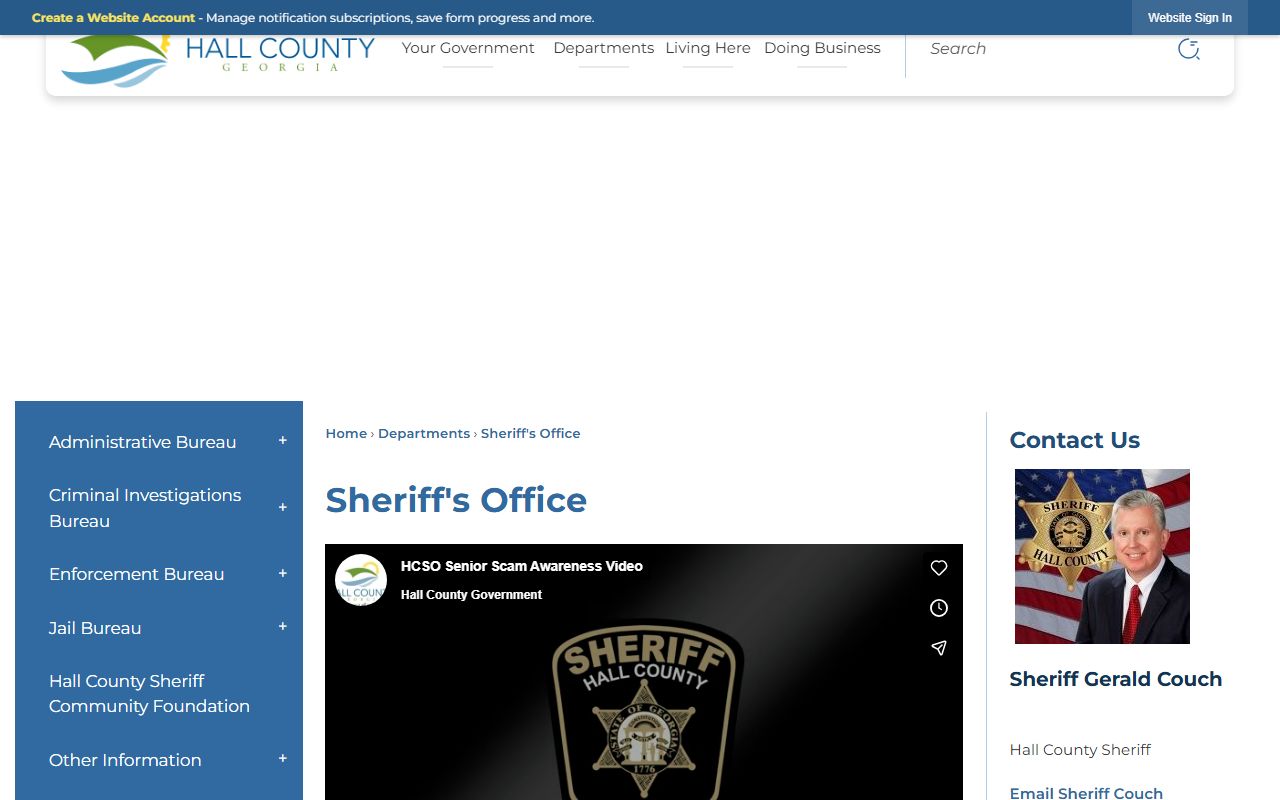
The sheriff channel matters because arrest records, jail material, and court charge records do not all live at one counter.
Booking Side Versus Charge Record
A booking entry is a custody snapshot. It may show the holding facility, primary charge, and bond amount while the person is still in Hall County Jail. A charge record is a court-facing accusation or count. One arrest can lead to several charges, and one booking charge can be revised when the District Attorney or Solicitor reviews the file. That is why a Hall County arrest lookup should be checked against the docket before it is treated as the final court status.
| Record Lane | Typical Source | What It Shows | Limit |
|---|---|---|---|
| Booking or arrest side | Sheriff, jail, Police-to-Citizen catalog | Name, primary charge, holding facility, bond, custody status | May not show final prosecutor action |
| Court charge side | Clerk, Superior Court, State Court, Magistrate warrant records | Filed count, offense, warrant or case link, plea, disposition status | May not show every jail intake fact |
| Criminal-history side | State criminal-history systems and GBI restriction process | Arrest and disposition data eligible for statewide criminal-history use | Access may require identity rules or restriction review |
Hall County's inmate catalog is a public custody tool, while the Hall Courts docket and the Clerk's Criminal Division are better sources for filed court charges. Magistrate criminal information is not broadly online in Hall County because the local Magistrate page says only civil cases are available online due to sensitive public-record restrictions.
Hall County Charging Documents
Court charges after arrest usually appear through a charging document. In Georgia criminal practice, the research file identifies indictment as a grand-jury charging document for serious criminal cases and accusation as a prosecutor-filed charging document. A warrant, citation, or complaint can also explain the event that started the arrest or court process. The Hall County court charge record should be read by document type, not just by the first offense label listed at booking.
| Document | Who Uses It | Hall County Context | What to Check |
|---|---|---|---|
| Complaint or warrant | Law enforcement, Magistrate Court, prosecutor | Can start the arrest path or support probable cause | Warrant number, offense date, judge or court, bond |
| Accusation or information | Prosecutor | Often used for prosecutor-filed charges in State Court or some criminal filings | Filed count, statute, offense level, amendments |
| Indictment | Grand jury | Common for serious felony prosecutions in Superior Court | Grand-jury counts, named offense, arraignment, plea |
The Northeastern Judicial Circuit District Attorney handles felony prosecution work for Hall County and Dawson County. Hall's local DA contact page lists Lee Darragh as District Attorney. The Solicitor-General is relevant for State Court misdemeanor and traffic matters. Those offices do not replace the Clerk's docket, but they explain why a booking label may change after legal review.
The Sheriff's Records Unit is the source for many arrest-report requests.
Source: Hall County Sheriff's Records Unit
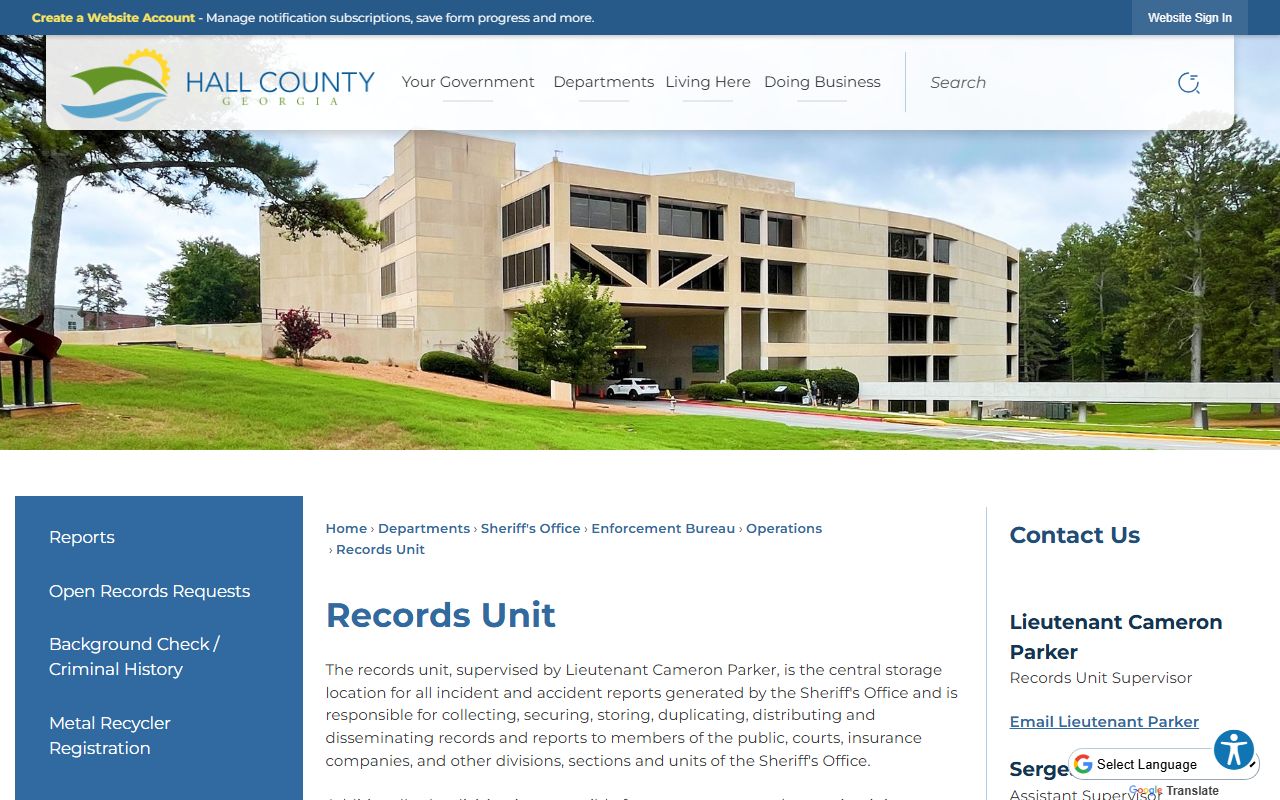
Use the Sheriff's Records Unit for arrest reports, then use court channels for filed charge and disposition details.
Hall County Charge Status
A Hall County court charge record can change as the case moves. A count may be pending, amended, reduced, dismissed, placed on a dead docket, or resolved by plea, verdict, or nolle prosequi. Nolle prosequi means the prosecutor dismisses a charge. A dead docket entry means the matter is inactive, but it does not equal an acquittal. The exact status should be checked in the Clerk's court record or with the Criminal Division when the online entry is thin.
| Status | Plain Meaning | Record Caution |
|---|---|---|
| Pending | The charge has not reached a final plea, dismissal, verdict, or sentence. | Bond or court dates may still change. |
| Amended or reduced | The filed count was changed, often after prosecutor review or negotiation. | Compare the first booking charge with the court count. |
| Dismissed | The court record shows the charge did not proceed to conviction. | Look for whether all counts or only one count was dismissed. |
| Nolle prosequi | The prosecutor chose not to pursue the charge. | Georgia record restriction may still require a process. |
| Dead docket | The case is inactive and not set for ordinary action. | It is not the same as not guilty. |
Note: A charge status is a court entry, not a broad character finding, and should be read with the full case docket.
Search Hall County Arrest Records
Start with the right source for the question. Current custody and primary charge data comes from the Hall County inmate list and Police-to-Citizen catalog. Arrest reports and jail records that are not visible online use the Sheriff's open-records process. Filed charges, pleas, and dispositions are checked through Hall Courts or by contacting the Clerk's Criminal Division. Magistrate arrest warrants use Georgia Magistrate Records when available.
- Check current custody in the Hall County inmate population list if the person may still be detained.
- Search Hall Courts for a Superior or State Court criminal case when the filed charge should be on the docket.
- Use Georgia Magistrate Records for arrest-warrant searches and related Magistrate warrant data.
- Request arrest reports through the Sheriff's Records Supervisor if the online jail catalog does not answer the records question.
- Call the Clerk's Criminal Division at 770-531-7038 when the court case status, disposition, or certified court record is needed.
The Sheriff's open-records page states that requests must be submitted to the Records Supervisor, the designated Open Records Officer, and that a written response is sent within three business days when possible. Hall County's general NextRequest system changed on July 1, 2026, but court system and sheriff requests remain separate routes.
The Sheriff's open-records page supplies the arrest-report request channel.
Source: Hall County Sheriff's open-records requests
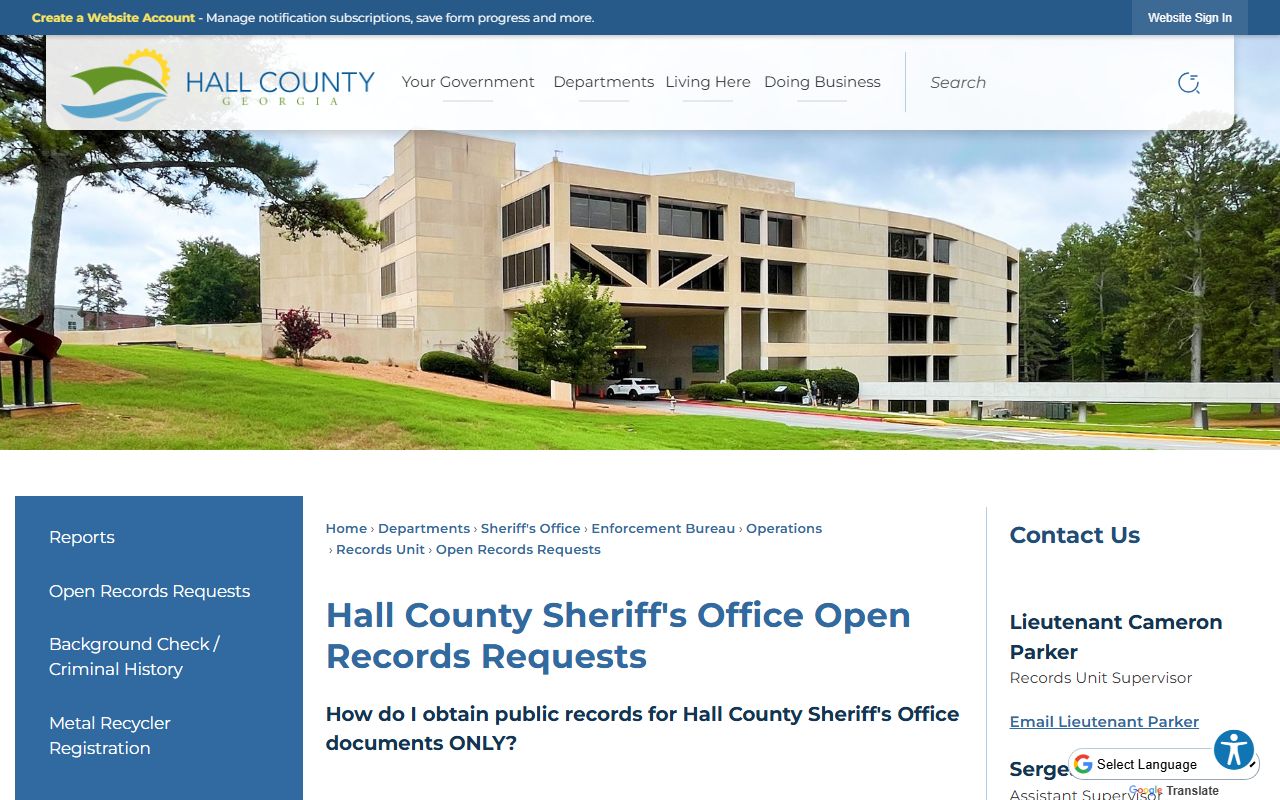
When no public catalog entry has enough detail, the sheriff records request process is the local fallback.
Hall County Charges vs Convictions
A charge is an accusation. A conviction is an outcome after a plea or verdict. The difference is central to Hall County arrest records because booking data may show a charge before any court has made a final finding. A later court record may show dismissal, plea to a lesser count, nolle prosequi, sentence, probation, or another disposition.
| Point | Charge | Conviction |
|---|---|---|
| Record stage | Appears after arrest, warrant, citation, accusation, or indictment. | Appears after guilty plea, bench trial, jury verdict, or other finding. |
| Meaning | An allegation that must still be resolved. | A resolved finding that can trigger sentence, probation, fine, or supervision. |
| Where to verify | Jail catalog, warrant portal, Clerk docket, charging document. | Clerk docket, sentencing sheet, final disposition, criminal-history record. |
| Risk of error | High if read without updates. | Lower, but still should be checked against certified court records. |
The Hall County criminal court records file is the better source for the final case outcome because it can include arraignment, motions, plea, disposition, and sentence.
Georgia Charge History Limits
Statewide criminal-history access is different from a county arrest lookup. The Georgia Bureau of Investigation explains Georgia criminal-history record restriction under O.C.G.A. 35-3-37. For many arrests after July 1, 2013, GBI says there is no separate application through the arresting agency. The person must contact the prosecutor to have eligible records restricted. For arrests before that date, the person applies at the arresting agency.
In Hall County, that can mean three offices are involved. The Sheriff's Office may have the arresting-agency record. The District Attorney or Solicitor may have the prosecution approval role. The Clerk may have the court disposition record needed to show what happened to the charge. A public search should not treat a booking result, a charge, and a statewide criminal-history entry as one record.
The GDC offender query is a separate statewide source for sentenced offenders.
Source: Georgia Department of Corrections offender query
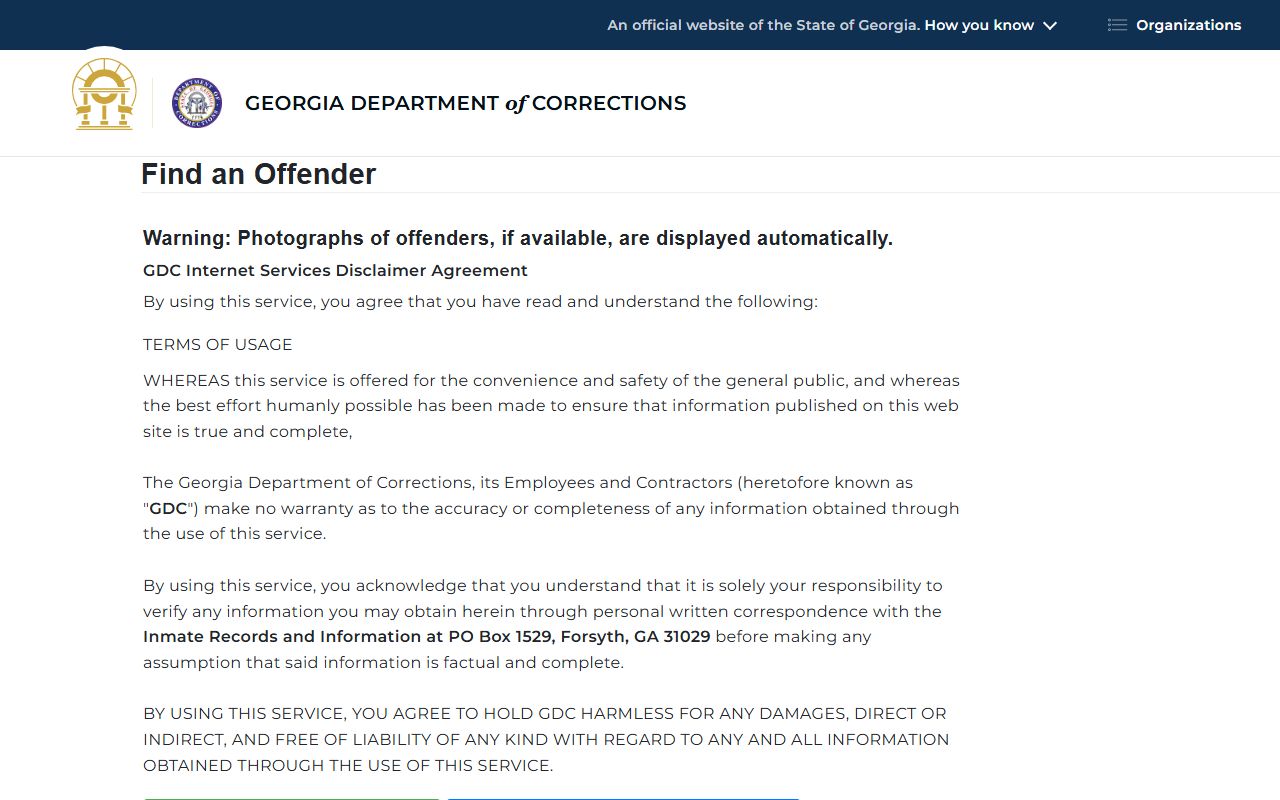
Use GDC offender search for sentenced state offenders, not for a fresh Hall County arrest booking search.
Hall County Arrest Report Requests
Arrest reports, incident reports, and jail records that are not shown in the online catalog use the Sheriff's Office records process. The request form asks for requester name, business or agent, address, phone, email, and a description of the records requested. Incomplete descriptions can delay or prevent release. After the first 15 minutes, the Sheriff's Office may charge for search, retrieval, copying, redaction, and supervision costs.
| Request Field | How to Use It | Why It Matters |
|---|---|---|
| Requester identity | Provide first name, last name, business or agent, and contact data. | The office needs a clear person to answer. |
| Email and phone | Use a reachable email and phone number. | Written response is sent by email when possible. |
| Records requested | Name the arrest report, incident, person, date, or case link if known. | Specific requests are easier to search and review. |
| Follow-up route | Use the Records Supervisor channel, not an unrelated sheriff employee. | Hall says requests are not filed until they reach the designated officer. |
The sheriff form is the direct online channel for Sheriff's Office records.
Source: Hall County Sheriff's open-records request form
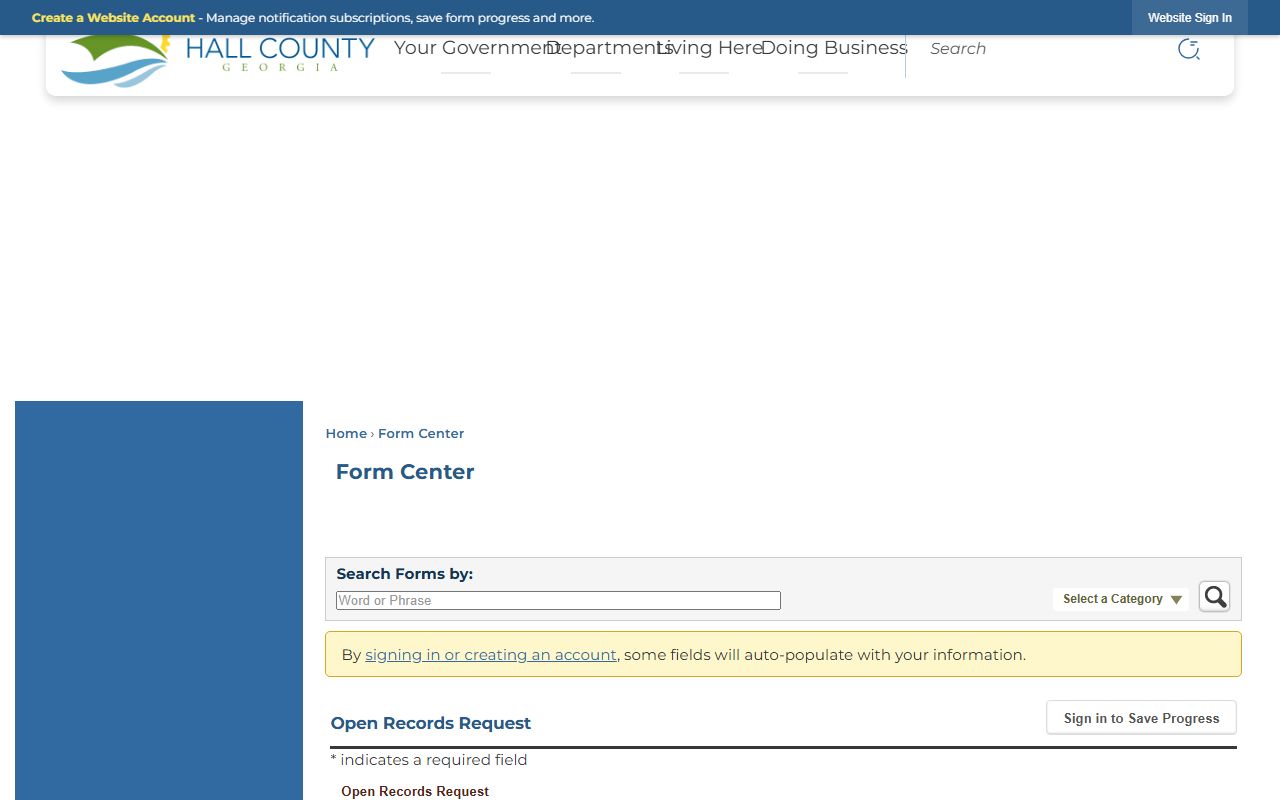
The form supports the arrest-record side of the search when a public docket or jail card is not enough.
Restricted Hall County Charge Records
Some Hall County charge and arrest records are not open like ordinary adult court records. Juvenile cases are not treated as adult public criminal files. Adoption and mental-health proceedings are restricted. Sealed criminal records and eligible Georgia record-restricted arrests may be limited for non-criminal-justice purposes. Protected identifiers such as Social Security numbers, financial account numbers, and minor names may be redacted.
The Hall County Correctional Institute is also not a substitute for a court charge search. It is a county-operated institution under a Georgia Department of Corrections contract and houses state inmates at the Barber Road complex. People looking for local booking charges should use the jail roster and Sheriff's Office channels, while people looking for sentenced state custody should use GDC tools.
The Hall County Correctional Institute page gives state-inmate context.
Source: Hall County Correctional Institute
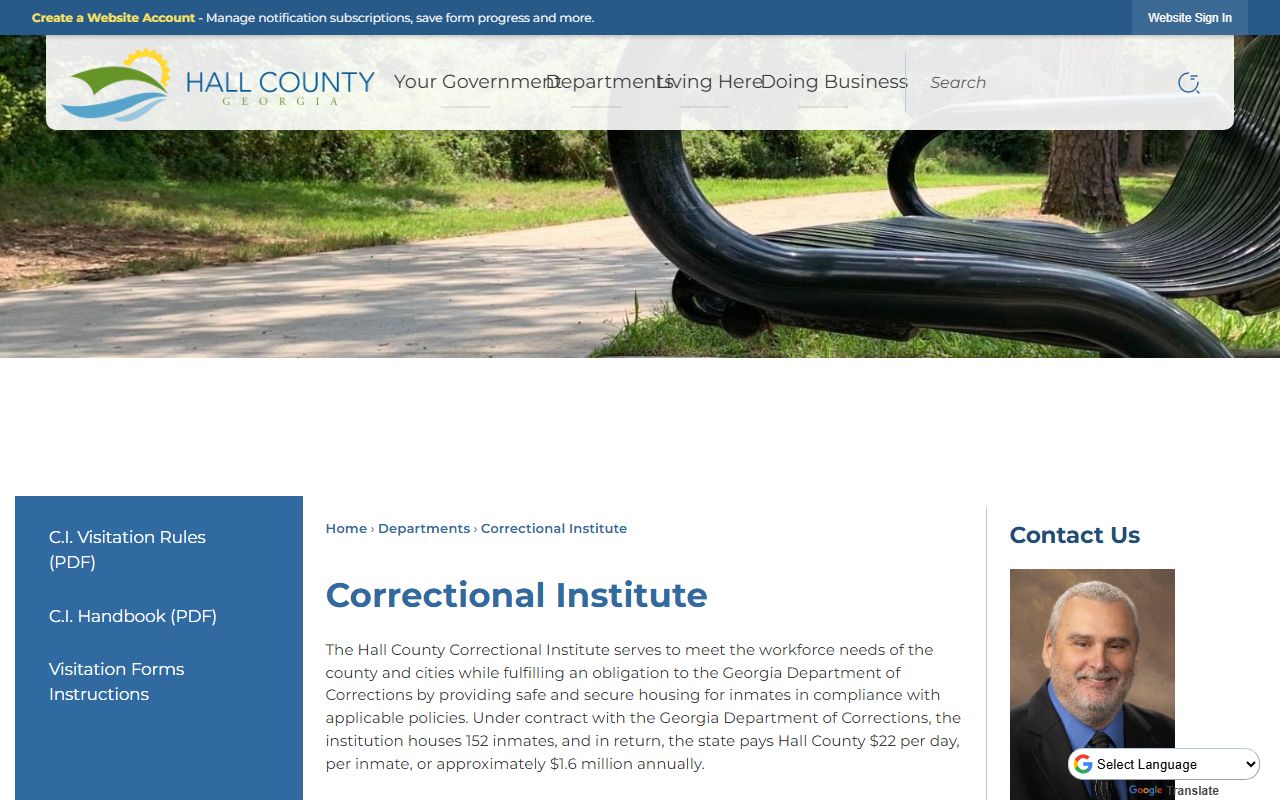
The correctional institute distinction helps keep local arrest records separate from state inmate custody records.