
Hall County Court Dockets
A docket is the court's running list of case activity. It is not the same as the full case record. A Hall County court docket may show the case number, party names, file date, hearing type, judgment date, disposition date, and event history. The full case record can include pleadings, motions, orders, exhibits, sentencing sheets, and certified copies that may require a Clerk request or a visit to the court office.
Hall County court dockets are split by court class. Superior Court is the general jurisdiction trial court for felony cases, divorce, equity, title-to-land disputes, and larger civil matters. State Court handles many misdemeanors, traffic matters, and civil cases. Magistrate Court handles civil claims, ordinance matters, deposit account fraud, arrest warrants, and calendars. Probate Court handles estates, guardianships, conservatorships, marriage functions, weapons-carry applications, and probate calendars.
The Hall County Magistrate Court page is one successful manifest source for Hall County court dockets.
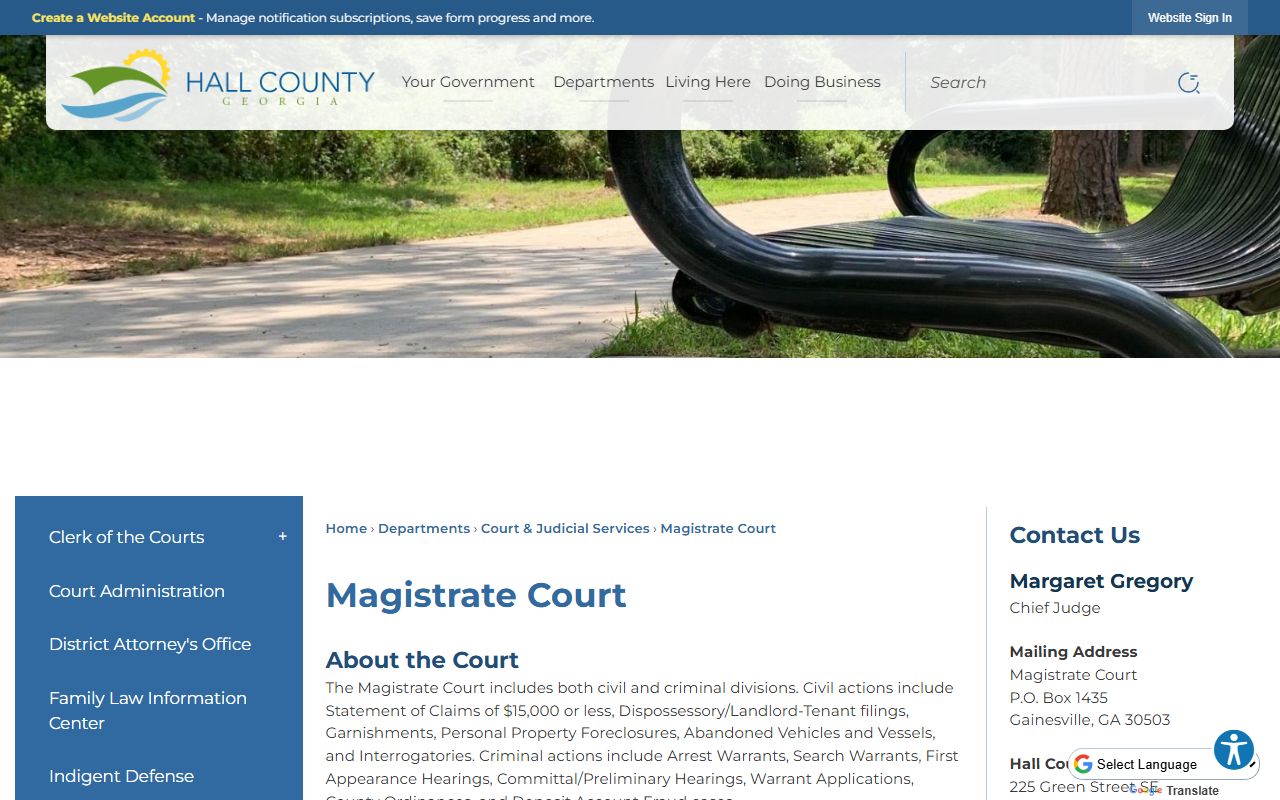
That page is important because it states the online Magistrate docket is civil-only and that criminal case information must be requested through the Magistrate Court office.
Find Hall County Court Dockets
The official starting point for Hall County court dockets is the Hall County Online Docket. From there, users choose Superior and State Courts or Magistrate Court. The landing page also links to Georgia Magistrate Records. It states that information is provided as is, that the offices make every effort to keep it accurate, and that more information is available from the Clerk of Courts Office or Hall County Magistrate Court at the courthouse.
- Open the Hall County Online Docket and decide which court likely controls the case.
- Choose Superior and State Courts for Clerk-managed dockets, including felony, divorce, State Court misdemeanor, traffic, and civil matters.
- Choose Magistrate Court or Georgia Magistrate Records for Magistrate civil filings, ordinance cases, deposit account fraud, warrants, and calendars.
- Search by party name, case number, date range, or court calendar option when the portal offers those fields.
- Contact the Clerk, Magistrate Court, or Probate Court when the online docket is missing, unclear, sealed, or not enough for certified use.
The Magistrate civil filing search source was captured for Hall County court dockets.
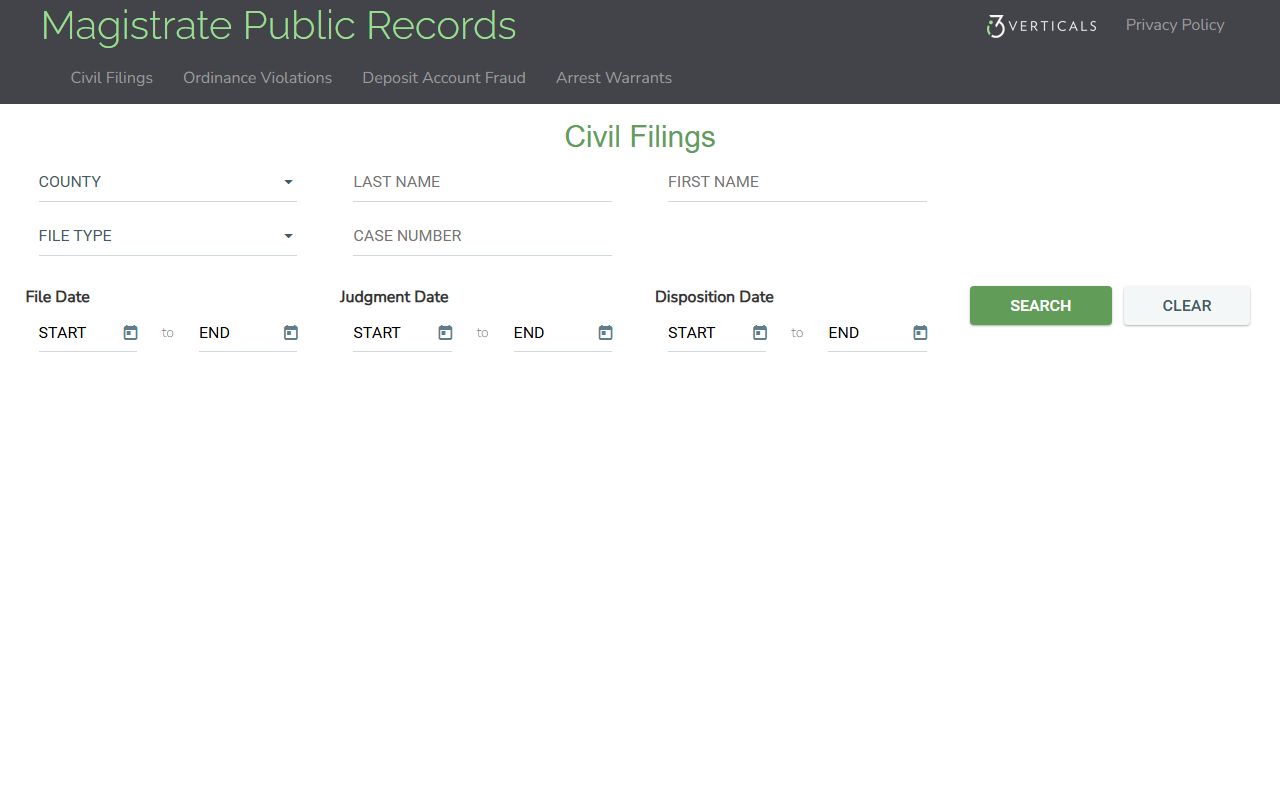
The civil search path shows how Magistrate docket searches can use party names, case numbers, filing dates, judgment dates, and disposition dates.
Hall County Docket Channels
Hall County court dockets have several official channels. The online route is strongest for Superior and State case-management searches and Magistrate civil calendars. Probate has its own statewide portal. In-person and phone routes remain part of the docket search because some criminal, juvenile, sealed, older, or office-only information will not appear in a public portal.
| Channel | Best Use | Limit |
|---|---|---|
| Hall Online Docket | Routes users to Superior, State, and Magistrate docket paths. | Landing page only, with office follow-up for added detail. |
| Superior and State Web Case Management | Clerk-managed case dockets for Superior and State Court matters. | Dynamic public access, with certified records still through the Clerk. |
| Georgia Magistrate Records | Magistrate civil filings, ordinance violations, DAF, warrants, and calendars. | Hall Magistrate says online criminal case information is restricted. |
| Georgia Probate Records | Probate estate cases after 2010 and probate calendars. | Probate, marriage, weapons-carry, and guardianship matters use Probate channels. |
| Clerk, Magistrate, and Probate counters | Older files, certified copies, and records not shown online. | Office hours, fees, restrictions, and case type control access. |
The Magistrate ordinance violation search is another successful Hall County court dockets image source.
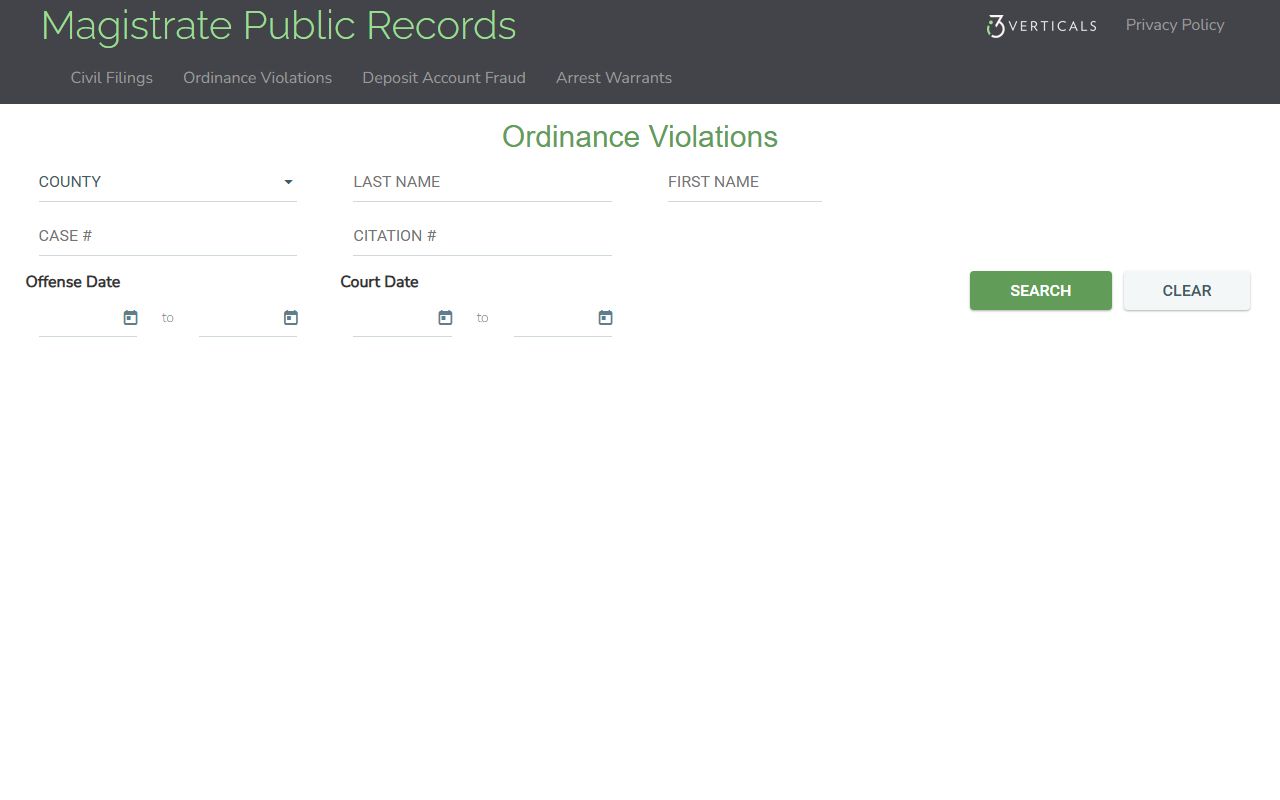
Ordinance dockets can be separate from Superior and State case searches, so the issuing court or city can matter when a citation does not appear in the county case-management portal.
Hall County Docket Fields
The research did not verify a full downloadable docket sample, but it did capture the public field inventory used across Hall and Georgia Magistrate portal labels. These fields are enough to explain how Hall County court docket entries are read and why a docket can identify case status without providing every document.
| Field | What It Shows |
|---|---|
| Case number | The court's tracking number for the case or filing. |
| County | The selected county, such as Hall County in Georgia Magistrate Records. |
| File type | The category of filing or case class shown by the portal. |
| File date | When the case or filing entered the court system. |
| Judgment date | When a judgment was entered, often for civil matters. |
| Disposition date | When the court recorded an outcome for the case or charge. |
| Party names | Names tied to plaintiffs, defendants, petitioners, respondents, or attorneys. |
| Calendar or hearing type | Arraignments, bench trials, or other scheduled court events. |
| Document access | Downloadable document access was not reliably verified from a public sample. |
Hall County Courts With Dockets
Georgia's court structure shapes Hall County court dockets. The appellate courts are the Supreme Court of Georgia and the Court of Appeals of Georgia. Local trial courts include Superior, State, Juvenile, Probate, Magistrate, and Municipal Courts. Hall County is in the Northeastern Judicial Circuit with Dawson County. Appeals from Superior and State Courts generally move to Georgia's appellate system unless a subject belongs directly in the Supreme Court of Georgia.
- Superior Court dockets track felonies, divorce, equity, title-to-land matters, and larger civil cases.
- State Court dockets track misdemeanors, many traffic matters, and civil cases within State Court jurisdiction.
- Magistrate Court dockets track civil claims, ordinance matters, deposit account fraud, arrest warrants, and calendars.
- Probate Court dockets track estates, wills, guardianships, conservatorships, marriage functions, weapons carry, and commitments.
- Municipal court dockets may control city traffic or ordinance citations from Gainesville, Flowery Branch, Oakwood, and other Hall County municipalities.
The Supreme Court of Georgia rules page is a Hall County court dockets manifest source.
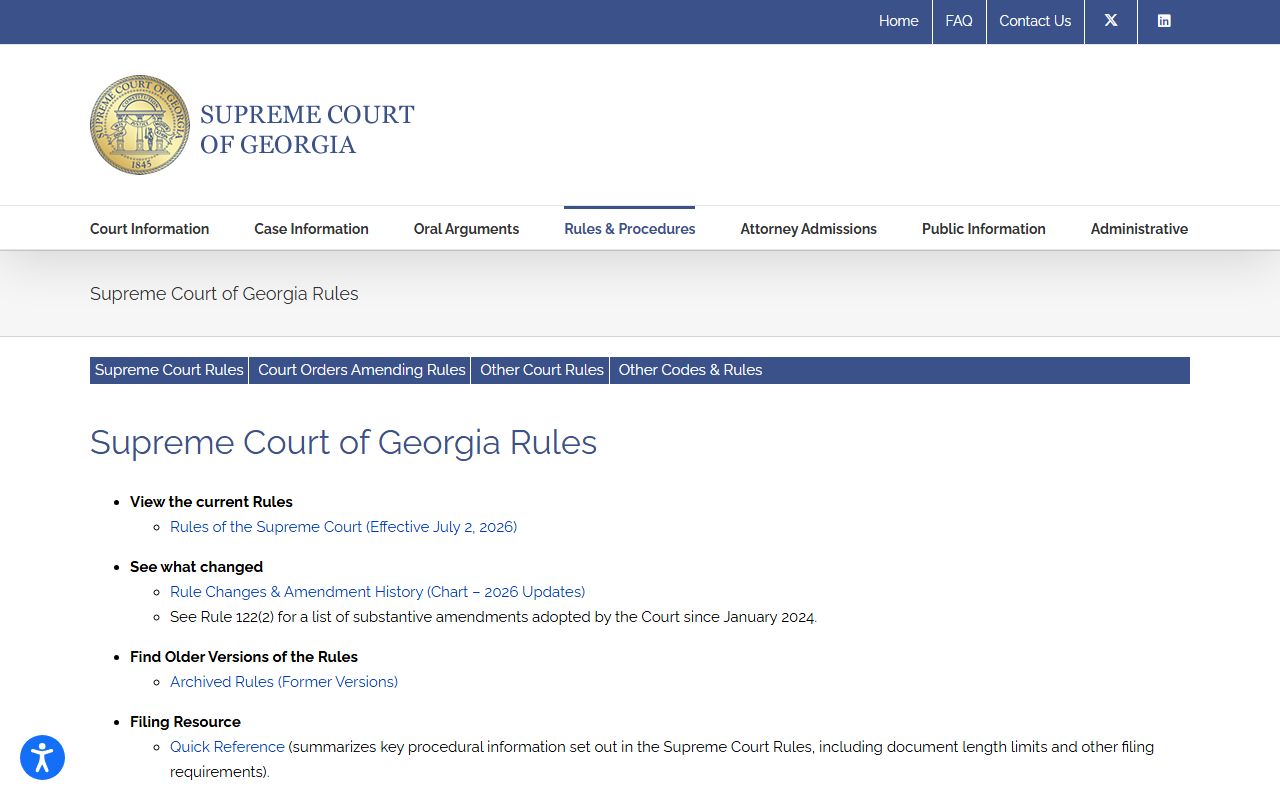
State court rules matter because public docket access can be limited by statute, court rule, or a sealing order even when a case exists.
Municipal courts can also matter for Hall County court dockets. The research identified Gainesville Municipal Court, Flowery Branch Municipal Court, and Oakwood Municipal Court as city-level venues referenced by local criminal division material. Hall County communities include Braselton, Buford, Flowery Branch, Gainesville, Gillsville, Lula, Oakwood, and Clermont. A traffic or ordinance citation issued by a city police department may need the issuing municipal court instead of the county Superior, State, or Magistrate portal.
Hall County Dockets vs Records
A docket is best for tracking case progress. A full case record is best for reading the filing itself. For example, a docket may show that a motion was filed, an arraignment was set, or a disposition was entered. The motion, plea form, sentencing sheet, or certified order may require a Clerk request. For all case types, the full Hall County court records path is broader than a docket search.
| Point | Docket | Full Case Record |
|---|---|---|
| Format | Chronological event list. | Case file with filings, orders, and related documents. |
| Best use | Track dates, status, hearings, and outcomes. | Review pleadings, orders, certified copies, and legal detail. |
| Access | Often online for public case classes. | May require counter service, copy fee, or certified copy request. |
| Limits | May omit documents or restricted details. | May still be sealed, redacted, or confidential by law. |
Note: Docket data should be verified with the court office before relying on it for filing deadlines, court appearances, or certified records.