
Hall County Criminal Court Records
A criminal court record is the case-level file kept once a charge is filed or a case opens in court. In Hall County, the Clerk of Superior and State Courts / Clerk of Court manages Superior and State Court records. Superior Court handles felony criminal cases and is the broadest trial court. State Court handles many misdemeanors and traffic-criminal matters. Magistrate Court can be involved with arrest warrants and lower-court activity, but Hall Magistrate states that criminal case information is not broadly online because of sensitive public-record restrictions.
This page stays focused on the full criminal case file. The arrest-to-charge path, booking data, and early charge status are different from the court file and fit better with Hall County arrest records and court charges. Jail custody is also separate. A person can appear in a jail roster before the court record contains a final disposition, plea, or sentence.
The GBI criminal history record restrictions page is one successful manifest source for Hall County criminal court records.
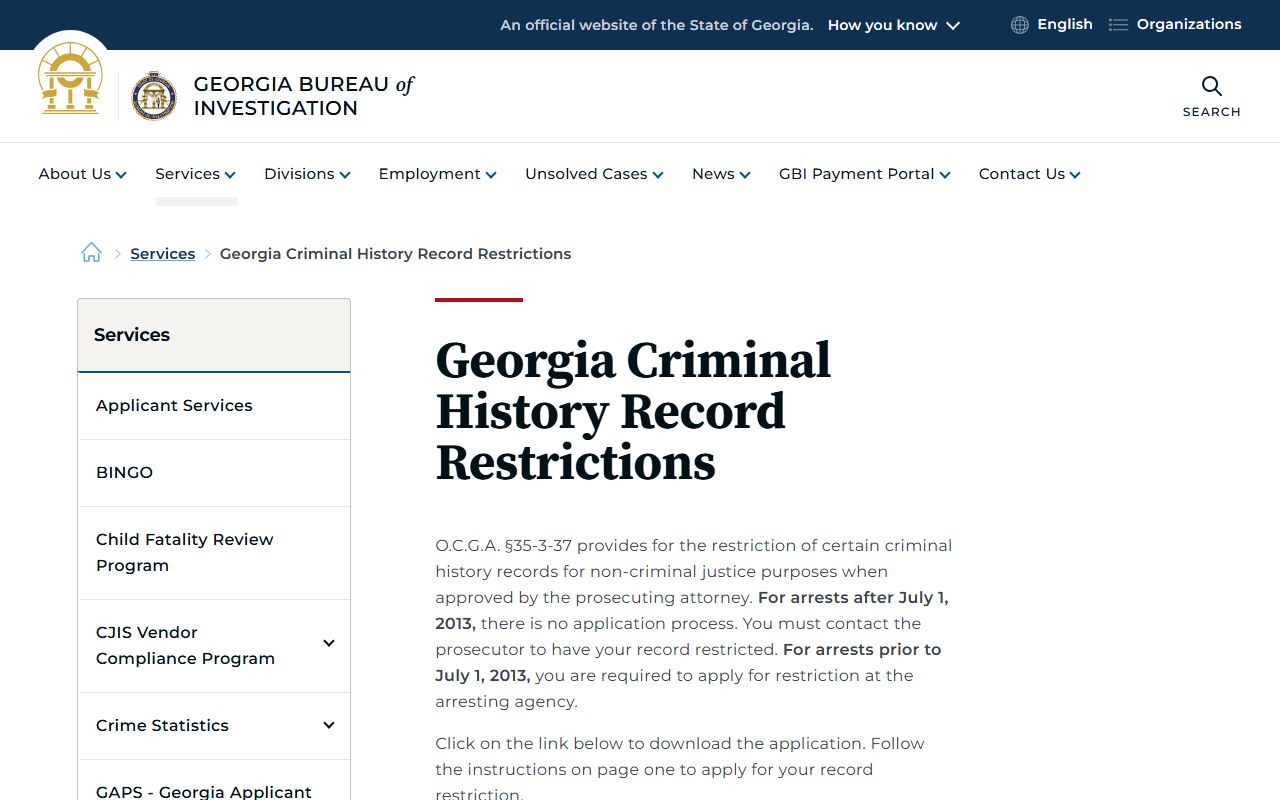
That source matters because a court disposition and a criminal-history restriction request can involve different offices and different rules.
Search Hall County Criminal Records
Hall County criminal court records can start at the Hall County Online Docket. Choose Superior and State Courts for Clerk-managed criminal case records. Use the Clerk's Criminal Division when an online record is not enough, when a certified disposition is needed, or when the search involves older files. The Criminal Division phone is 770-531-7038. The main Clerk number is 770-531-7025.
- Open the Hall County Online Docket and choose the Superior and State Courts path for Clerk-managed criminal court records.
- Search by defendant name or case number, then compare party names, dates, court, and case type.
- Review docket entries for arraignment, motions, hearing dates, plea, verdict, disposition, sentence, and probation terms.
- Use the Magistrate channel only for the Magistrate matter shown by the research, such as warrants or calendars, and contact Magistrate Court for criminal case information that is not online.
- Request certified copies, dispositions, or older criminal court records from the Clerk rather than relying on a screen print.
Public access is broad but not absolute. The case may be sealed, restricted, juvenile, active in a way that limits some data, or split between agencies. Court records, law-enforcement reports, jail records, and state criminal-history reports are related but not the same file.
Hall County Criminal Case Flow
A Hall County criminal court record grows as the case moves through the court. The case file may begin with a warrant, indictment, accusation, citation, or other charging document. It then adds calendar events, hearing entries, pleas, orders, motions, verdicts, dispositions, sentencing sheets, probation terms, and financial obligations. Not every case reaches trial. Some charges are amended, reduced, dismissed, nolle prossed, or resolved by plea.
Case flow: Charges Filed › Arraignment › Pretrial and Motions › Plea or Trial › Disposition › Sentencing
| Stage | What Happens |
|---|---|
| Charges filed | The prosecutor or charging process moves an accusation, indictment, warrant, or citation into court. |
| Arraignment | The defendant is advised of charges and a plea may be entered. |
| Pretrial and motions | The parties file requests and the judge enters orders that shape the case. |
| Plea or trial | The case resolves through a plea, bench trial, jury trial, dismissal, or other outcome. |
| Disposition | The court records the result for each charge or the case as a whole. |
| Sentencing | The court records jail, prison, probation, fines, conditions, or other punishment after conviction. |
What Hall Criminal Records Show
Hall County criminal court records can show more than an arrest or charge. They document how the court handled the case. A criminal court record may show the defendant name, case number, court, charge, plea, motion practice, hearing schedule, verdict, disposition, sentence, bond orders, probation terms, and financial obligations. Some screens may show only docket-level data. Certified copies and complete files still come from the office that maintains the original court record.
| Field | What It Shows |
|---|---|
| Case number | The court's criminal case identifier. |
| Defendant | The person accused in the criminal court case. |
| Court | Superior, State, Magistrate, municipal, or appellate court path when shown. |
| Charges | The offense labels or counts filed in court, which may later change. |
| Arraignment | The hearing where charges are addressed and a plea may be entered. |
| Plea | Guilty, not guilty, nolo, or another plea entry when recorded. |
| Motions and orders | Requests and judge rulings that affect evidence, scheduling, or procedure. |
| Disposition | The final or charge-level outcome, such as guilty, dismissed, acquitted, or nolle prosequi. |
| Sentence | Custody, probation, fines, conditions, or other punishment after conviction. |
The Georgia Courts record restriction self-help page is another manifest source for Hall County criminal court records.
That resource supports the distinction between reading a case outcome and seeking restricted public access to eligible criminal history.
Charges vs Convictions
A charge is an allegation filed or pursued in court. A conviction is an outcome after a guilty plea, verdict, or other conviction event. Hall County criminal court records can show both, and they can also show charges that were dismissed, reduced, amended, nolle prossed, dead docketed, or resolved without conviction. This distinction is central when reading a criminal case file.
| Point | Charge | Conviction |
|---|---|---|
| Meaning | An accusation or count filed in court. | A court outcome based on plea, verdict, or conviction entry. |
| Timing | Appears early in the case. | Appears after resolution of the charge. |
| Can change | May be amended, reduced, dismissed, or nolle prossed. | May lead to sentence, probation, fine, or other court order. |
| How to verify | Read the docket and charging document. | Read the disposition and sentence from the court record. |
The Northeastern Judicial Circuit accountability courts overview was captured as a Hall County criminal court records source.
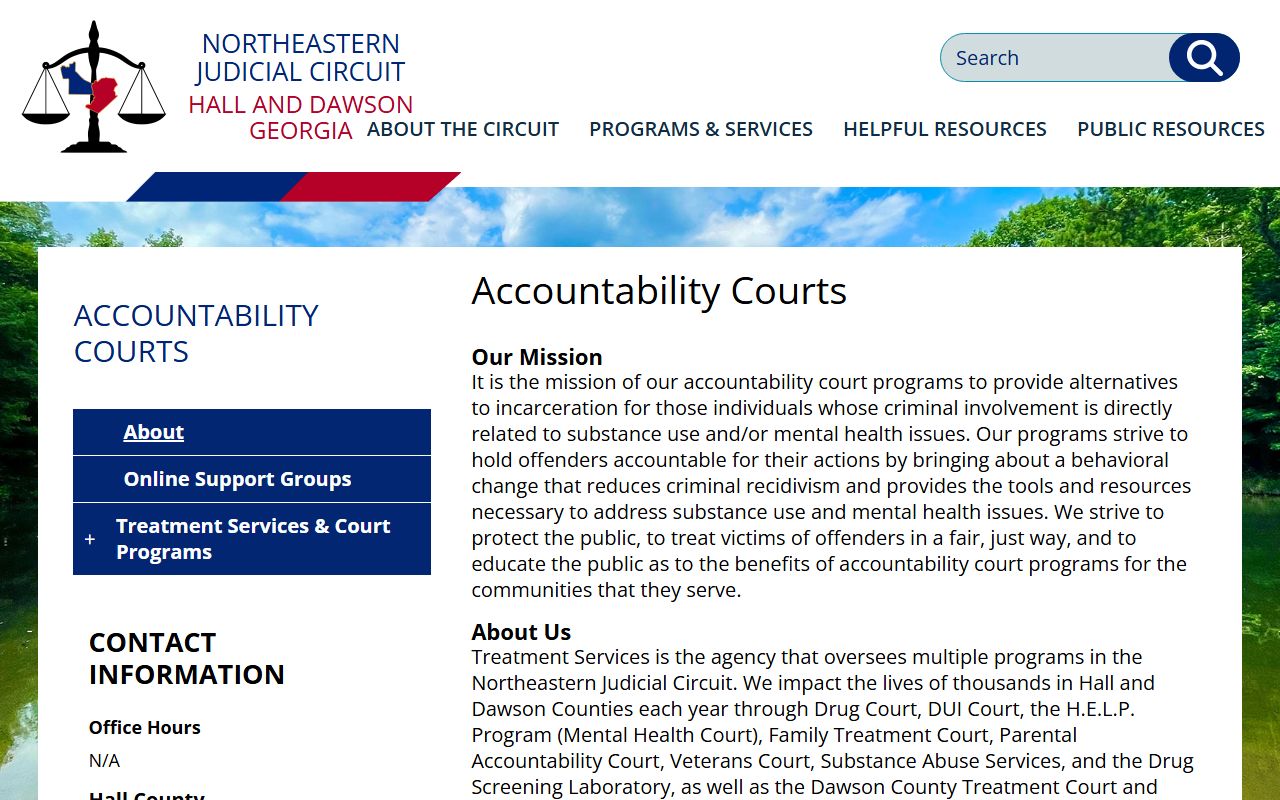
Accountability court programs show why a criminal case outcome may include treatment, supervision, and phased conditions rather than only jail or fine entries.
Hall County Criminal Programs
Hall County criminal court records may intersect with Northeastern Judicial Circuit accountability programs. Drug Court began in 2001 and has a minimum 24-month duration. The H.E.L.P. Program lasts 20 to 26 months, has five phases, and may accept misdemeanor, felony, post-plea, pre-sentencing, and probation revocation cases if prosecution eligibility is met. Veterans Treatment Court links eligible veterans with community-based treatment resources.
These programs do not replace the court file. They can affect docket entries, plea timing, sentencing, probation, and program conditions. A person reading a Hall County criminal court record should look for whether a case moved into an accountability court, whether participation followed a plea, and whether the final disposition changed after program completion or termination.
The manifest includes the Hall County Drug Court source.
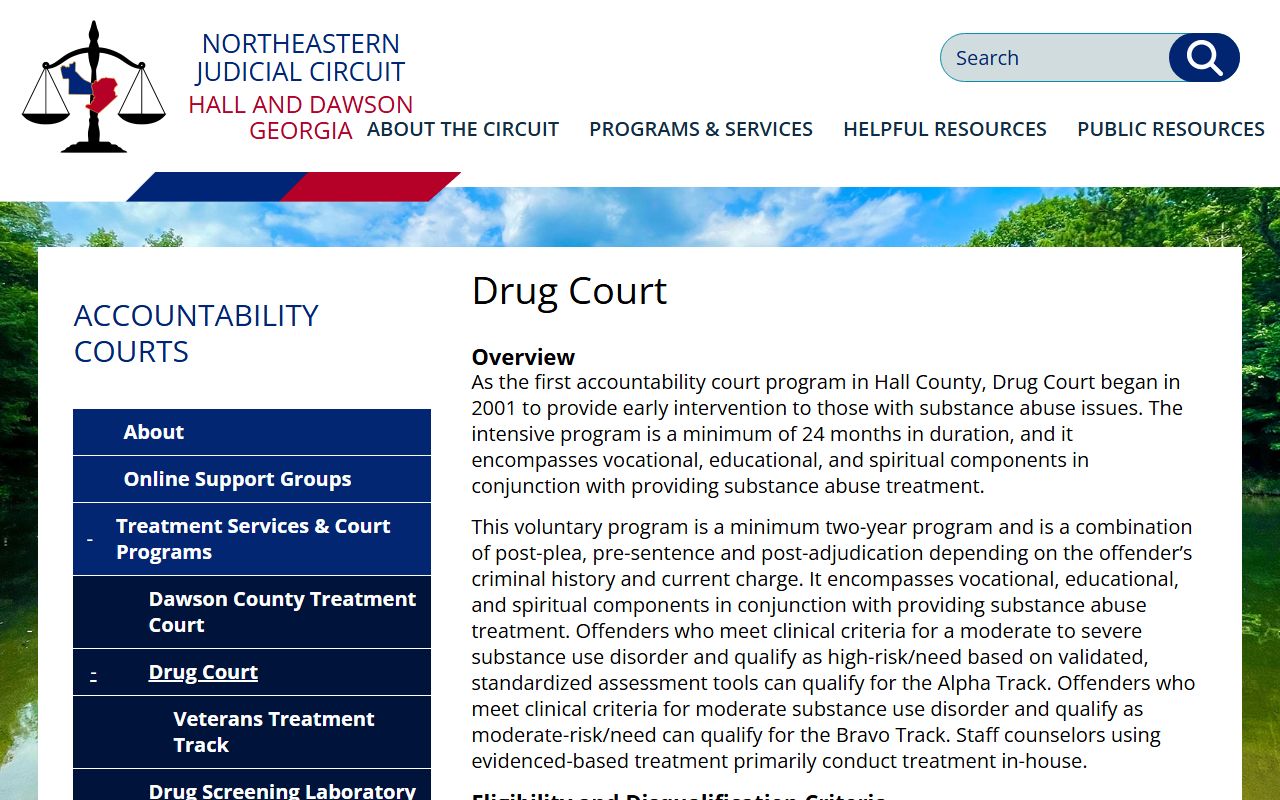
Drug Court details are relevant because program length and supervision can appear as part of a criminal case's resolution or post-plea pathway.
The Hall County Family Treatment Court source also appears in the criminal records manifest.
Family Treatment Court is not a general criminal search portal, but it shows how Hall County court records can involve specialized judicial programs and sensitive family issues.
Sealed vs Expunged Records
Georgia often uses the term record restriction rather than older broad promises of expungement. Under O.C.G.A. 35-3-37 guidance from GBI, certain criminal history records may be restricted for non-criminal-justice purposes. A Hall County criminal court record may still require the Clerk, District Attorney, Solicitor, or Sheriff's Records process depending on the date, charge, disposition, and type of record involved.
| Point | Sealed or Restricted | Expunged |
|---|---|---|
| Georgia framing | Record restriction limits non-criminal-justice public access when eligible. | Older wording is often used casually, but Georgia guidance focuses on restriction. |
| Public view | The public may not see restricted details through ordinary searches. | Do not assume all court or agency traces are erased. |
| Office path | Post-July 1, 2013 arrests go through the prosecutor for restriction approval. | Pre-July 1, 2013 arrests may involve the arresting agency application path. |
| Hall County contacts | Criminal Division, District Attorney, Solicitor, and Sheriff's Records may each matter. | A court disposition may still be needed to support a restriction request. |
Note: Juvenile, adoption, mental health, sealed, and protected-identifier records should not be treated as ordinary public criminal files.
Access Hall Criminal Records
Georgia public-record law and court-record rules start from public access, then apply limits. O.C.G.A. 50-18-70 describes the strong public-record presumption. O.C.G.A. 50-18-71 covers timing, inspection, copying, and fee rules. Uniform Superior Court Rule 21 addresses public court records and sealing procedures.
The Hall County District Attorney is Lee Darragh, with the office at 225 Green Street SE, 3rd Floor, Gainesville, GA 30501, phone 770-531-6965. The Solicitor-General handles State Court misdemeanor and traffic prosecution from 225 Green Street SE, 1st Floor, phone 770-531-7012. The Public Defender represents eligible Hall County Superior Court felony defendants, while State Court indigent defendants apply through the NEJC Indigent Defense Office.
The U.S. Attorney Gainesville Division source appears in the manifest for Hall County criminal court records.
Federal criminal records are not searched through the Hall County Clerk; Gainesville Division federal cases use federal court systems such as PACER and Northern District records.